PMDD natural treatment plan: 8 evidence-based weeks
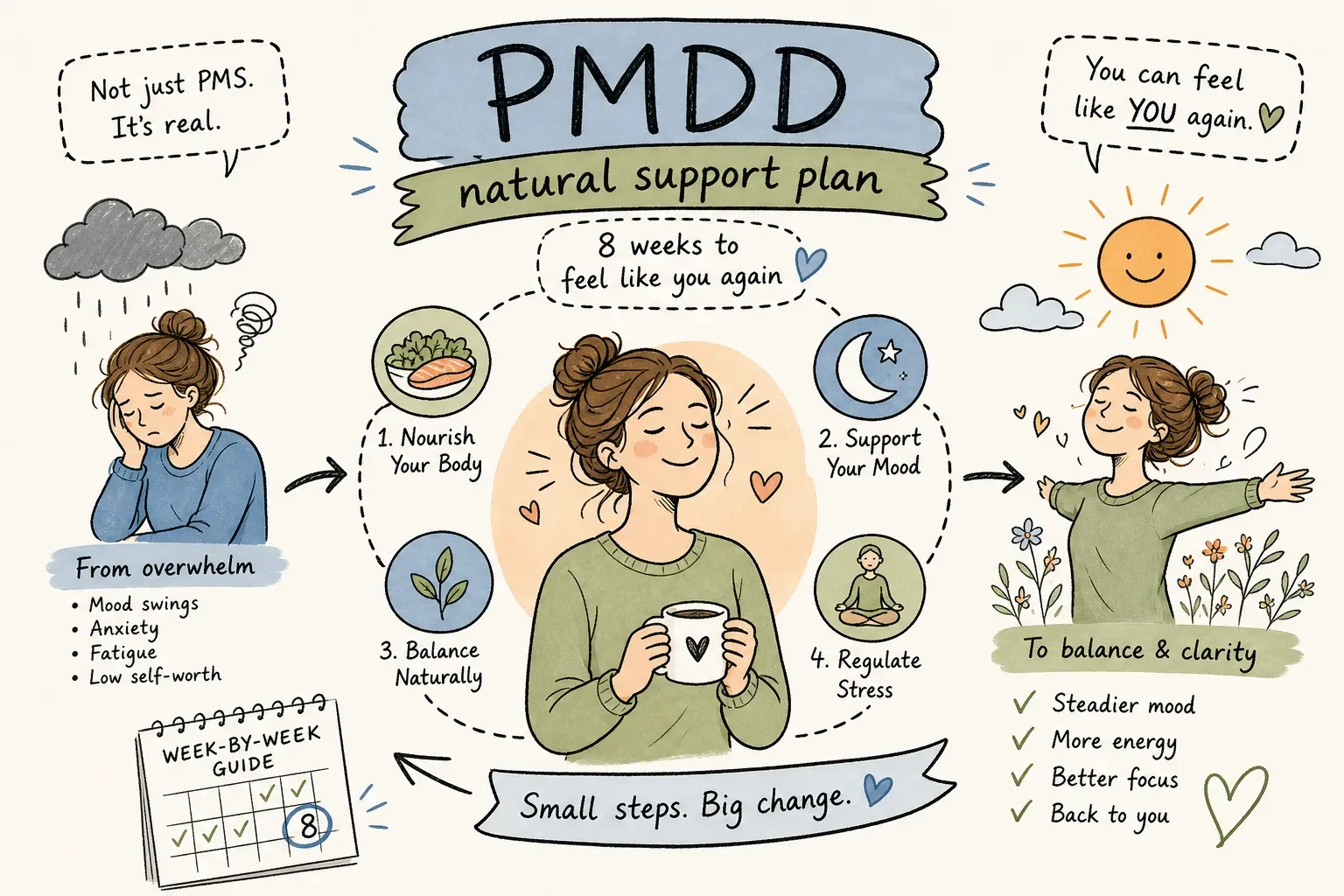
Many women with PMDD report being offered one of two options: a prescription or a pamphlet about stress reduction. Neither of those is a plan. And neither addresses the real question: why is this happening in my body? This PMDD natural treatment plan offers an eight-week, evidence-based framework to reduce symptoms through nutrition, targeted supplementation, and lifestyle changes, structured around how your cycle actually works.
PMDD sits at the intersection of hormone sensitivity, inflammation, nutritional status, and nervous system load. Treating just one thread rarely unravels the whole pattern. But treating all of them in a sequenced, evidence-informed way may meaningfully improve symptoms for many women, particularly when evidence is strongest for individual components such as exercise, calcium, and cognitive behavioural approaches.
This article lays out an eight-week PMDD natural treatment plan covering food-first strategies, supplements with genuine research behind them, lifestyle changes supported by clinical trials, and the safety considerations you need to know. I'm Naomi Judge, a Sydney-based naturopath specialising in women's hormonal health. This framework reflects the approach I use with women across Australia who are tired of being managed and ready to understand what's driving their symptoms.
Why PMDD calls for a different kind of approach
More than severe PMS
PMDD and PMS are not the same thing. PMS involves predictable premenstrual symptoms that are uncomfortable but manageable. PMDD sits in a different category: the mood-related symptoms are severe enough to interfere with work, relationships, and daily functioning, and they cluster predictably in the late luteal phase before resolving within a few days of menstruation beginning.
Many patients report delayed diagnosis, spending years being told their experience is normal before receiving an accurate clinical picture. That lag matters, not just emotionally but practically, because delayed diagnosis can worsen functional impairment and complicate treatment over time.
The root-cause problem with symptom-only treatment
Softening PMDD symptoms without addressing their drivers is like turning down the smoke alarm without checking what is burning. Common underlying factors include altered sensitivity to progesterone metabolites, elevated inflammation in the luteal phase, nutritional deficits that affect neurotransmitter production, and a nervous system already running at capacity.
A naturopathic PMDD protocol works by reducing these drivers systematically rather than suppressing their expression. The eight-week PMDD natural treatment plan below is structured to do exactly that.
PMDD natural treatment plan, nutrition that supports your cycle from the inside out
The nutrients with the strongest evidence
Four nutrients have the clearest research support for PMDD-spectrum symptoms: calcium, magnesium, vitamin B6, and omega-3 fatty acids. Vitamin D and zinc show some emerging promise for PMS-spectrum symptoms and are worth discussing with your practitioner, though the evidence base for the four core nutrients is currently stronger.
Calcium has the strongest clinical trial evidence, with commonly studied doses around 1,200 mg per day from a combination of food and supplementation. Food sources include yoghurt, milk, fortified plant milks, and calcium-set tofu.
Magnesium supports women with significant bloating, breast tenderness, and headaches, at approximately 250 to 400 mg per day of elemental magnesium, found in nuts, seeds, beans, and leafy greens.
Vitamin B6 supports serotonin pathways and is best approached through food first: chicken, fish, eggs, and potatoes are all reliable sources. Omega-3 fats play an anti-inflammatory role in the luteal phase and are found in salmon, sardines, chia seeds, and walnuts. None of these require a complicated supplement regimen to begin; most can be meaningfully increased through consistent food choices before any supplementation is added.
What a PMDD-supportive day of eating actually looks like
Breakfast might be eggs and spinach on whole-grain toast with yoghurt on the side. Lunch could be a rice bowl with salmon or tofu, leafy greens, broccoli, and avocado. An afternoon snack of almonds and pumpkin seeds covers both magnesium and vitamin E. A dinner built around fish or legumes and vegetables rounds out the day without relying on anything exotic or expensive.
The emphasis is on consistency rather than perfection. Small, regular habits across multiple cycles create more change than a strict plan held for a single week and then abandoned.
What to reduce and why it amplifies symptoms
High sugar intake destabilises blood glucose, which worsens mood instability in an already-sensitive luteal phase. Caffeine increases cortisol and disrupts sleep architecture. Alcohol can worsen sleep quality, mood, and hormonal balance in the luteal phase and steal your serotonin and GABA. Compounding symptoms that are already present. Excess salt contributes to bloating that is already a feature of PMDD for many women.
This is not a list of forbidden foods; it is a map of the mechanisms. Understanding the physiology makes these changes feel less arbitrary and considerably easier to sustain long-term.
Supplements with actual evidence behind them
Calcium and magnesium: where to start
Calcium has the strongest clinical trial support of any supplement for PMDD-spectrum mood and physical symptoms, with the most studied dose sitting around 1,200 mg per day in divided doses. If you are eating two to three calcium-rich food sources daily, top up the remainder with a supplement.
Magnesium is a reasonable addition if bloating or headaches are significant features; aim for 300 to 400 mg per day as citrate or bisglycinate, which are better absorbed than oxide forms.
Start magnesium at a lower dose and increase gradually, as higher doses can cause loose stools in some women. This is manageable once you know to expect it, but it catches many people off guard.
Vitamin B6, omega-3s, and vitamin D: the supporting cast
Vitamin B6 has modest PMS evidence at doses up to 100 mg per day. Chronically exceeding this can cause peripheral neuropathy, so dose matters and more is genuinely not better here.
Omega-3 supplementation at 500 to 2,000 mg per day has a plausible anti-inflammatory mechanism and limited PMDD-specific trial data; it is a reasonable addition if oily fish does not feature regularly in your diet. Vitamin D has emerging PMS evidence, but levels vary considerably between individuals, so testing before supplementing is worthwhile rather than guessing at a dose.
Vitex, curcumin, and herbal remedies for PMDD: what the research actually says
Vitex (chasteberry) has some evidence for PMS symptoms but limited PMDD-specific trial data. It is not recommended during pregnancy or alongside hormonal therapies without clinical oversight, so it is not a herb to self-prescribe without professional guidance. Curcumin has shown meaningful effect sizes in recent research: a 2024 meta-analysis reported a standardised mean difference of -1.41 for overall PMS score, which is clinically significant. Most of this evidence is PMS-level rather than PMDD-specific, so these herbal remedies for PMDD are worth discussing with a clinician rather than trialling without clinical guidance.
Movement, sleep, and stress: the lifestyle layer
Exercise timelines from the clinical trials
The exercise evidence for premenstrual symptoms is genuinely strong. A systematic review of 15 trials found that all 15 reported significant symptom reduction with exercise. A 2025 meta-analysis found that running three or more times per week for nine to twelve weeks reduced negative affect, and yoga at the same frequency improved pain and fatigue. Most trials showed measurable benefit from six to eight weeks, with the strongest results appearing at nine to twelve weeks.
This timeline matters because many women abandon an exercise routine after two or three weeks when they do not feel an immediate difference. The evidence suggests that patience is not passive; it is part of the intervention itself.
Sleep hygiene and nervous system regulation
Sleep is a clinical priority in PMDD symptom management even though dedicated sleep intervention trials are limited. Consistent sleep and wake times, reducing blue light exposure in the luteal phase, and limiting alcohol (which fragments sleep architecture) are the most practical strategies available. Yoga and mindfulness-based movement appear in some trials as helpful for physical symptom reduction, particularly pain and fatigue, making them a useful dual-purpose addition to a broader PMDD lifestyle plan.
Building your PMDD natural treatment plan: the 8-week framework
Weeks 1, 2: laying the nutritional foundation
Begin with food changes only: increase calcium- and magnesium-rich foods, reduce sugar and caffeine, add omega-3-rich meals three to four times per week, and establish regular meal timing to stabilise blood glucose. Start tracking your symptoms using a simple cycle-mapping approach. This baseline is not optional; it informs every decision over the next six weeks.
Weeks 3, 4: adding targeted supplementation
Introduce calcium at 1,200 mg per day in divided doses. Assess whether magnesium is warranted based on the symptom profile from your first two weeks of tracking. Begin a consistent exercise habit: thirty minutes of aerobic movement at least three times per week. If sleep is already disrupted in your luteal phase, start applying sleep hygiene strategies specifically in those final ten to fourteen days of your cycle.
Weeks 5, 6: refining the plan based on your data
By now, you will have one full cycle of data and possibly a second, depending on your cycle length; most cycles run about four weeks, so two complete cycles typically take closer to eight weeks total. Look at what has shifted and what has not. If physical pain is the dominant remaining symptom, consider swapping running for yoga. If mood symptoms are still significant, consider adding B6 or omega-3 supplementation. Revisit caffeine and alcohol habits honestly, using your tracking to connect choices to outcomes rather than relying on memory alone.
Weeks 7, 8: assessing outcomes and next steps
Compare your current symptom severity to your baseline from weeks one and two. For many women, eight weeks of consistent, multi-layered intervention produces a noticeable shift. For others, particularly those with more severe or longstanding PMDD, this is where personalised clinical support becomes most useful.
A consultation with a PMDD-specialist naturopath provides the next layer: functional hormone testing, hormonal pattern analysis, and a plan built around your specific cycle rather than a general framework. This is the work I do, and it is where the broad approach above becomes something precise and tailored to what your body is actually doing.
Safety considerations and when to get clinical support
Drug-supplement interactions you need to know about
St. John's wort should not be combined with SSRIs due to serotonin syndrome risk, and it reduces the effectiveness of combined oral contraceptives by increasing hormone clearance. This is not a minor caution; it is a clinically significant interaction. 5-HTP and SAM-e carry similar serotonin syndrome risk alongside SSRIs. Omega-3s at higher doses may increase bleeding risk when combined with SSRIs or anticoagulants, so the dose and context both matter.
Calcium, magnesium, and B6 at recommended doses do not have major known interactions with SSRIs or oral contraceptives, though doses above 1,500 mg per day of calcium warrant caution. "Natural" does not mean interaction-free, and any supplement addition alongside prescription medication deserves a conversation with your prescriber or naturopath before you begin.
When natural support is not enough on its own
PMDD is a serious clinical condition. For some women, natural interventions are a valuable complement to medical treatment, not a replacement for it. If your symptoms include thoughts of self-harm, an inability to function at work or in relationships, or no meaningful improvement after eight weeks of consistent lifestyle intervention, medical support is the appropriate and necessary next step. Your naturopath and your GP are a team, not a choice, the best outcomes consistently come from working with both rather than treating them as opposing options.
Start somewhere, then build
A PMDD natural treatment plan works when it addresses nutrition, supplementation, lifestyle, and cycle awareness together rather than as isolated fixes. No single element carries the whole load, and the sequence matters as much as the components themselves.
The eight-week timeline laid out here is a pragmatic clinical framework, and evidence for individual components, particularly exercise, calcium, and cognitive behavioural approaches, supports meaningful benefit within six to twelve weeks. It is a starting point, not a finish line. For women who want to go deeper, Naomi Judge Naturopath offers personalised naturopathic consultations, cycle mapping education, and targeted nutrition protocols designed specifically for PMDD and late-luteal symptoms. Women across Australia access this support online, wherever they are located.
Understanding what is actually driving your symptoms changes the way you approach them. That shift, from managing to understanding, is where real change tends to begin. This eight-week PMDD natural treatment plan is a starting point; for personalised care, consider working with a PMDD specialist who can tailor the approach to your specific cycle and symptom history.