Progesterone anxiety: why calm hormones can cause panic
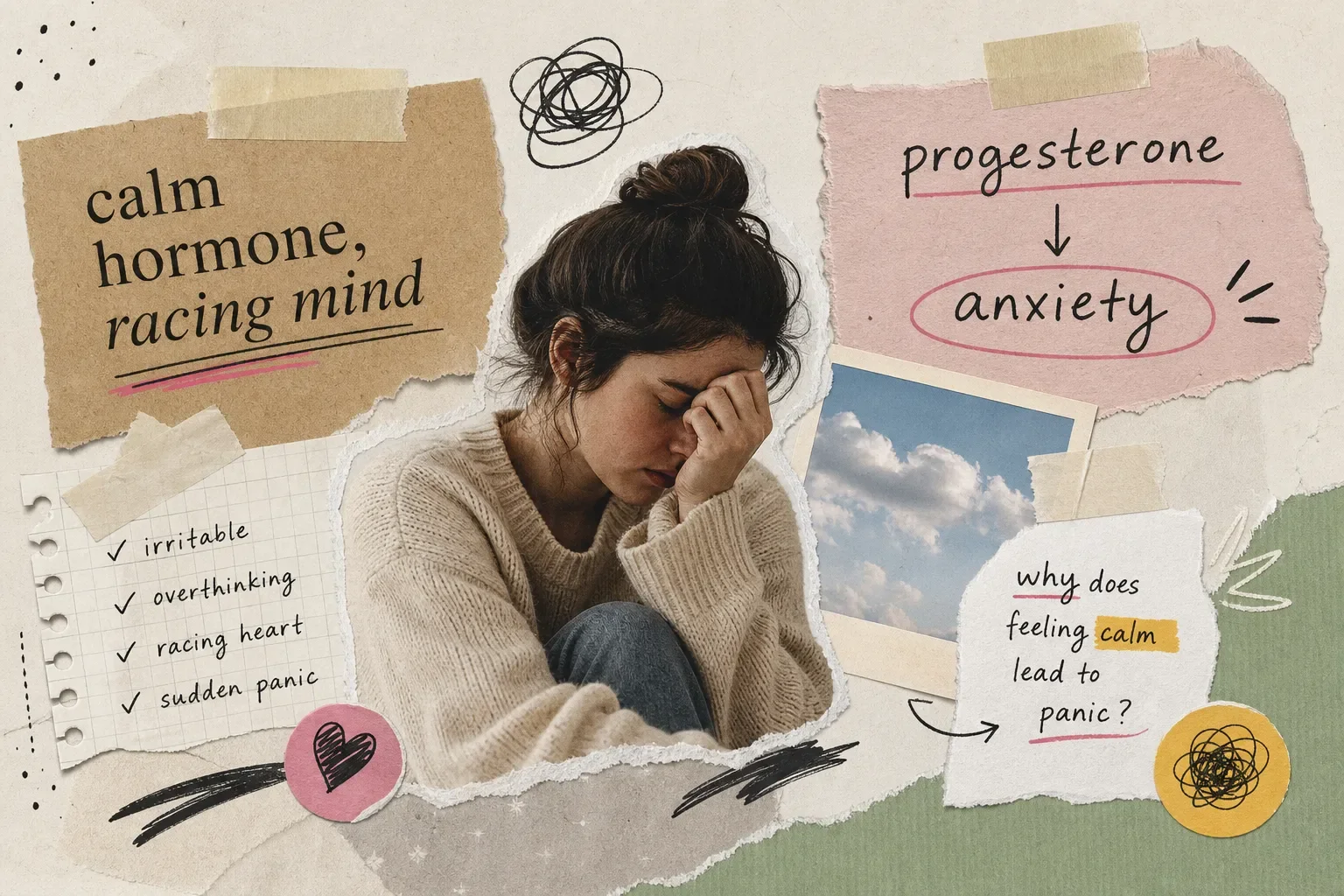
Progesterone anxiety- the cyclical panic, racing thoughts, and emotional dysregulation that arrives reliably in the two weeks before a period- is one of the more commonly overlooked patterns in women's hormonal health. Progesterone has a reputation as the body's natural tranquilliser: the hormone that's supposed to calm you down, ease you into the luteal phase, and prepare you for rest. So when anxiety appears on schedule each cycle, progesterone is rarely the first thing anyone suspects. Instead, women are assessed for generalised anxiety disorder, may be prescribed an SSRI, and sent on their way. For a subset of women, though, the symptoms are driven by menstrual-cycle hormones rather than a primary anxiety disorder, and that distinction matters enormously for treatment.
The relationship between progesterone and anxiety is more complicated than the "calm hormone" label suggests. For a significant subset of women, the hormonal fluctuations of the luteal phase are the direct trigger for panic, emotional reactivity, sleepless nights, and a felt sense of being completely unlike themselves. This is not a character flaw. It is biology, and it has a mechanism worth understanding. This article unpacks that mechanism, explains how to recognise the pattern in your own cycle, and outlines evidence-informed steps you can take. It's also the lens through which Naomi approaches cyclic mood symptoms in clinical work every single day.
The science behind progesterone anxiety: the GABA connection
Progesterone doesn't produce calm directly. In the brain, it converts into a neurosteroid called allopregnanolone, often shortened to ALLO. Allopregnanolone is a potent amplifier of GABA activity. GABA is the nervous system's primary brake, the signal that tells neurons to slow down and stop firing. When ALLO binds to GABA-A receptors, it increases inhibitory tone throughout the brain, reducing neuronal excitability and producing that quiet, settled feeling progesterone is famous for. In theory, more progesterone should mean more calm.
The clinical reality is more nuanced. During the luteal phase, progesterone doesn't stay steady. It rises, peaks in the mid-luteal window, and then falls sharply in the days before menstruation. Those rapid fluctuations in progesterone translate into fluctuations in ALLO, and that instability can alter the sensitivity of GABA-A receptors. Chronic exposure or sudden withdrawal may change the receptor's subunit composition, a mechanism proposed in preclinical and some human research, reducing its responsiveness to GABAergic signals and effectively lowering the nervous system's threshold for excitability. More fluctuation, less calm. For women with PMDD or progesterone sensitivity, the research points not to abnormal hormone levels but to an abnormal neurosteroid response to normal hormonal changes. Their receptors appear to be calibrated differently.
Why progesterone anxiety gets misdiagnosed as generalised anxiety disorder
When a woman presents with anxiety in a clinical setting, the standard assessment focuses on severity and duration. Is it persistent? Is it hard to control? Does it interfere with daily functioning? These are the markers for generalised anxiety disorder, and many women experiencing luteal-phase anxiety will tick those boxes during the weeks they are symptomatic. What is not always explored in routine consultations is timing relative to the menstrual cycle, and that omission can lead to years of misdirected treatment.
GAD is characterised by worry that spans the month without a clear pattern. Hormonal anxiety is different: it has a predictable window. For most women with this pattern, symptoms arrive seven to fourteen days before menstruation and ease within the first few days of bleeding. That resolution post-period is the clinically important signal, and it is the detail most often missed. Australian research on PMDD found that 55.8% of participants received a misdiagnosis before getting an accurate one, with anxiety disorders among the most common incorrect labels. The median number of healthcare professionals visited before diagnosis was five, a significant amount of time to spend being treated for the wrong thing.
The symptom picture also points away from a purely psychological origin. Luteal-phase anxiety tends to involve more than worry. Common features include:
waking between 2am and 4am
sudden irritability that feels out of proportion
emotional reactivity disproportionate to circumstances
racing thoughts and palpitations
a strong sense of "this is not me"
These symptoms overlap with anxiety disorders on the surface, but the cycle-linked recurrence and the clear post-bleed improvement are the distinguishing features.
What progesterone sensitivity actually feels like
The clearest signal of a progesterone anxiety pattern is timing. Anxiety that arrives reliably after ovulation and clears with the period is the headline symptom. Women with this pattern often describe feeling completely fine for the first half of their cycle, then noticing a shift, sometimes subtle at first, somewhere around day 15 to 21. By the week before their period, sleep is disrupted, small stressors feel enormous, and they are operating at a level of internal tension that doesn't match their external circumstances.
In perimenopause, this pattern can intensify or appear for the first time. As cycles shorten and progesterone output becomes erratic during the transition years, the fluctuations become more pronounced, and the nervous system's exposure to rapid ALLO changes becomes more frequent. Women who sailed through their thirties without premenstrual symptoms often find that their mid-forties bring a completely different hormonal experience, and progesterone-related anxiety is frequently the first and loudest signal.
It's also worth separating sensitivity to the body's own progesterone fluctuations from adverse reactions to synthetic progestins in hormonal contraception or HRT. Progestin anxiety is a related but distinct presentation. Synthetic progestins may not be metabolised into allopregnanolone in the same way the body's own progesterone is, which means they interact with GABA receptors differently. Approximately 10 to 20% of women using progestogen-containing treatments report progesterone intolerance symptoms, including anxiety, irritability, low mood, and insomnia. Switching progestin type, changing the delivery route, or adjusting dose can make a meaningful difference in this group.
How cycle tracking reveals the hormonal root cause
A single clinical appointment captures a snapshot; cycle mapping, by contrast, captures a pattern across weeks. When mood, sleep, energy, and physical symptoms are tracked daily across two to three full cycles, the data does something that no isolated blood test or one-off consultation can: it shows exactly when symptoms arrive, how they track with the hormonal shifts of the luteal phase, and whether they consistently resolve once menstruation begins. That pattern is the clinical signal that points toward a hormonal trigger rather than a generalised anxiety disorder.
Naomi uses cycle mapping as one of the primary tools used with clients experiencing cyclic mood symptoms. The goal is to cross-reference symptom timing with the known hormonal architecture of the cycle, noting when symptoms begin relative to ovulation, how they track with the shift from mid-luteal peak to late-luteal decline, and whether relief consistently arrives in the first few days of bleeding. This kind of longitudinal data transforms a vague, hard-to-describe experience into a clear clinical picture. If you want a structured place to start, the free Cycle Mapping Cheat Sheet can be found in the free Skool Group.
Managing progesterone anxiety with food and supplements
What you eat in the luteal phase influences both progesterone metabolism and the liver's capacity to clear excess hormones efficiently. The foundation is blood sugar stability across the day. Glucose dips trigger cortisol release, and elevated cortisol can interact with reproductive hormone production in ways that may affect luteal-phase function. Meals built around protein, healthy fats, and slow-release carbohydrates keep glucose steady and give the nervous system a more stable environment to operate in. This isn't complicated to implement; it just requires some deliberate planning in the second half of the cycle.
Beyond blood sugar, specific nutrients play a direct role in supporting both progesterone metabolism and GABA function:
Magnesium (found in leafy greens, pumpkin seeds, dark chocolate, and legumes) supports GABA receptor activity and helps regulate the nervous system's response to stress.
Vitamin B6 (from salmon, chickpeas, and bananas) is essential for neurotransmitter synthesis, including GABA and serotonin.
Zinc (from oysters, red meat, and legumes) supports progesterone production and immune function in the luteal phase.
Adequate fibre supports oestrogen clearance through the gut, reducing the hormonal imbalance that amplifies luteal anxiety.
On the supplement side, the clinical evidence is strongest for calcium (one large trial found 1,200mg daily reduced total PMS symptoms by approximately 48%), vitamin B6 at doses above 50mg for emotional PMS symptoms, and magnesium (various forms have evidence; clinicians often favour glycinate for tolerability and sleep support). Vitex agnus-castus has a longer history of use in clinical naturopathy for supporting luteal-phase progesterone output, though evidence from trials is variable and it works best when individualised to the specific hormonal picture. Supplement choices should always be tailored to the individual rather than applied as a generic protocol; this is where working with a practitioner makes the most meaningful difference.
When to seek further support
If your anxiety is linked to a progestin-containing contraceptive or HRT, there are clear options worth discussing with your prescribing practitioner. These include adjusting the dose or timing, switching progestin type or delivery route, or discontinuing and reassessing. Micronised progesterone is generally better tolerated for mood than many synthetic progestins, particularly medroxyprogesterone acetate, and switching formulations can produce a meaningful difference in a subset of women, though individual responses vary.
SSRIs are evidence-based for persistent anxiety disorders, and there are situations where they are the right choice. They are not, however, a substitute for addressing a clear hormonal underlying cause. If the anxiety arrives like clockwork with the luteal phase and resolves with menstruation, the primary clinical question is what's driving that pattern, not how to suppress the symptom on top of it. These are different questions with different answers, and conflating them is how women spend years treating the wrong thing.
For women who suspect a hormonal root cause but have hit a wall with conventional support, Naomi offers online consultations. The work centres on cycle mapping to identify the pattern and hormone-supportive nutrition as the foundation, with targeted supplementation layered in based on your individual presentation. It's a different clinical lens from a GP or general mental health consultation, and for women with cyclic mood symptoms, that specificity matters.
Your anxiety before your period is information
Progesterone-related anxiety is a recognised phenomenon; it affects a meaningful subset of women, and it is not evidence of a fragile mind. For many of them, the panic and emotional dysregulation that arrives before each period has a biological explanation rooted in how their nervous system responds to neurosteroid fluctuations, specifically, abnormal sensitivity to otherwise normal hormonal changes. Understanding that distinction changes the questions you ask, the data you collect, and the support you seek.
Cycle tracking is the lowest-barrier first step, and food and lifestyle changes in the luteal phase provide the nutritional foundation. For women who need more targeted support, working with a practitioner who understands the relationship between progesterone, allopregnanolone, and GABA offers a path toward genuine, root-cause relief rather than symptom management layered on top of an unaddressed underlying mechanism.
If you suspect progesterone anxiety is behind your premenstrual symptoms, start with cycle mapping to establish the pattern. The free Cycle Mapping Cheat Sheet gives you a structured framework for exactly that, and if you're ready for a more personalised approach, a consultation can help you get a clearer picture of what's actually driving your symptoms.